The Realm of Korone
Border of the Ice Shelf, a glacier up to two miles deep.
Korone has two faces. On the surface, it's a vast, brutally cold desert, wind-scoured and sun-bleached in a thin, distant way, but very much lived on. Real roads connect its surface settlements, caravans and riders cross it, and armies have marched over it more than once. What makes Korone infamous isn't the desert; it's the Ice Shelf, a glacier up to two miles thick, standing along the realm's edge like a wall the world forgot to finish. Nothing short of a determined climb crosses that.
Below both the desert and the Shelf, Korone runs deep, level after level of ice-locked caverns, not unlike the Deep of other worlds, except cold rather than merely dark. Lava rivers thread the lower levels, fed by heat no one down there has fully explained, while separate water rivers run through the levels above them, and the two rarely meet. Barges and rafts work both kinds of channel where the current allows, and for a lot of Korone's underground settlements, one of these rivers is a faster road than the surface could ever be.

Not every river down here has a shoreline worth mentioning, most just run through bare ice tunnels. But where a ley line happens to cross an open cavern, the ice pulls back enough to let something grow, and those clearings are where Korone's real underground life lives. Bronze wood is the signature species: trees that could pass for oak at a glance, except that they draw no light from any sun. They feed instead on the ley line itself, and glow for it, a steady golden light somewhere between moonlight and full day. Auriglacis, built where the ley lines run thickest, is ringed in groves of it, the whole city lit gold around the clock, with no true night and no true day, just the trees' own patient burning.
Bronze wood isn't alone down there, either. The same ley-lit clearings support a whole quiet ecosystem found nowhere on the surface, pale mosses, blind cave fauna, and, stranger than either, wild silver roses growing straight out of bare rock and old ice, untended and unexplained.
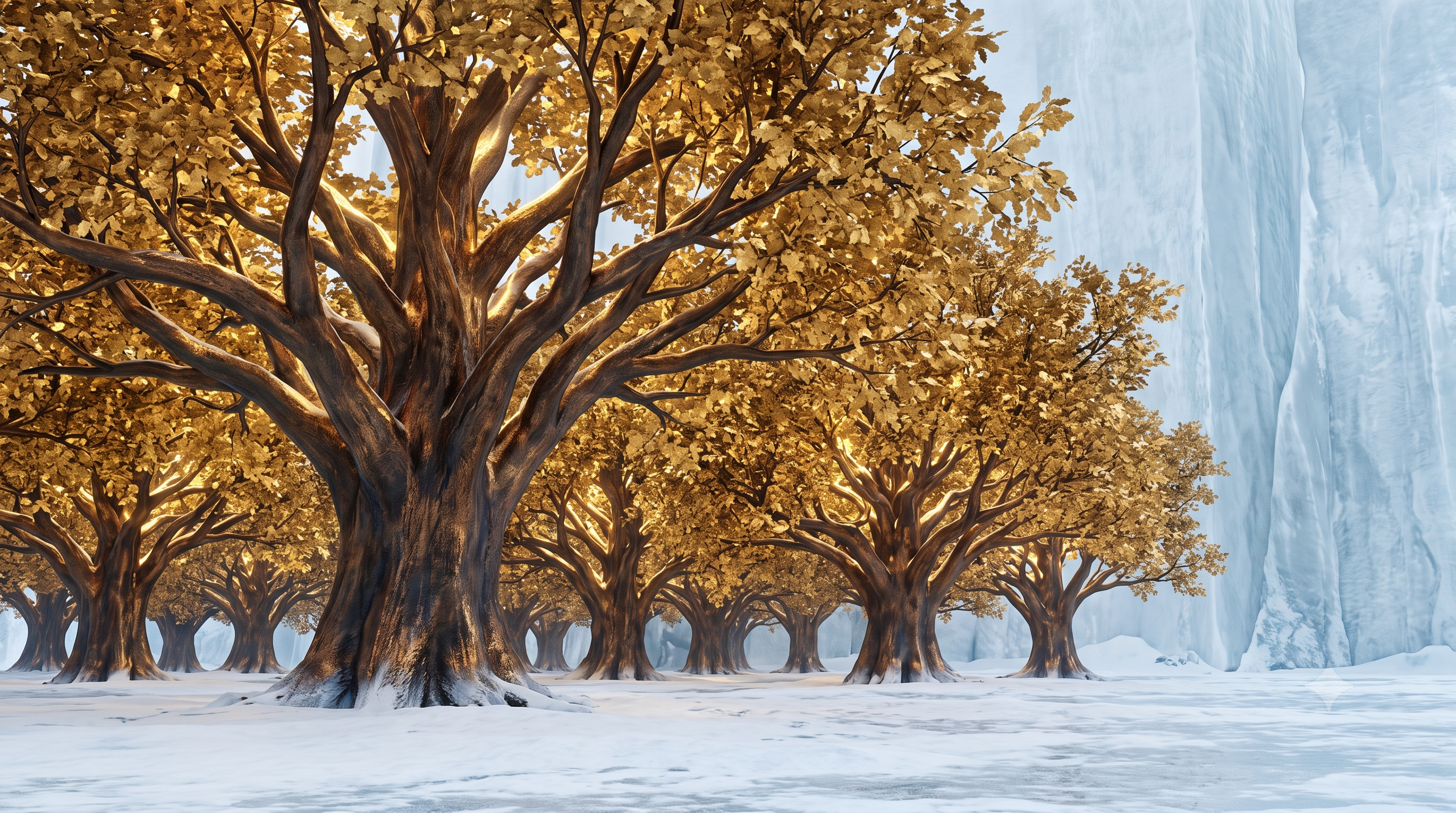
Not everything sealed in the ice is so gentle. Somewhere beneath Korone stands an Iüdex Ice Prison, built to hold the first vampire ever made, a thing closer in raw power to legend's strongest champions than to any dracula's-castle count, and judged too dangerous by half to simply destroy. And deeper still, further out where the maps stop being confident, an ancient undead dragon lies frozen in the shelf itself, whether it is truly dead, truly dormant, or simply waiting for warmer ice is not a question Korone's scholars enjoy being asked.
The shelf itself is less a wall than a geological fact, a face of ice so tall it makes any structure mortals have built look modest, with ladders run up its face as the only way to the top. What waits above is an entirely different world: a volcano civilization, its gladiatorial society, and the vampire hunters who live inside the mountain and train in its heat, close enough to keep watch on what Korone keeps sealed beneath the ice. Wealth and standing up there buy proximity to that warmth; the poor freeze near the summit instead. For anyone caught in the lowlands without real preparation, the shelf isn't an escape route. It's a death sentence.
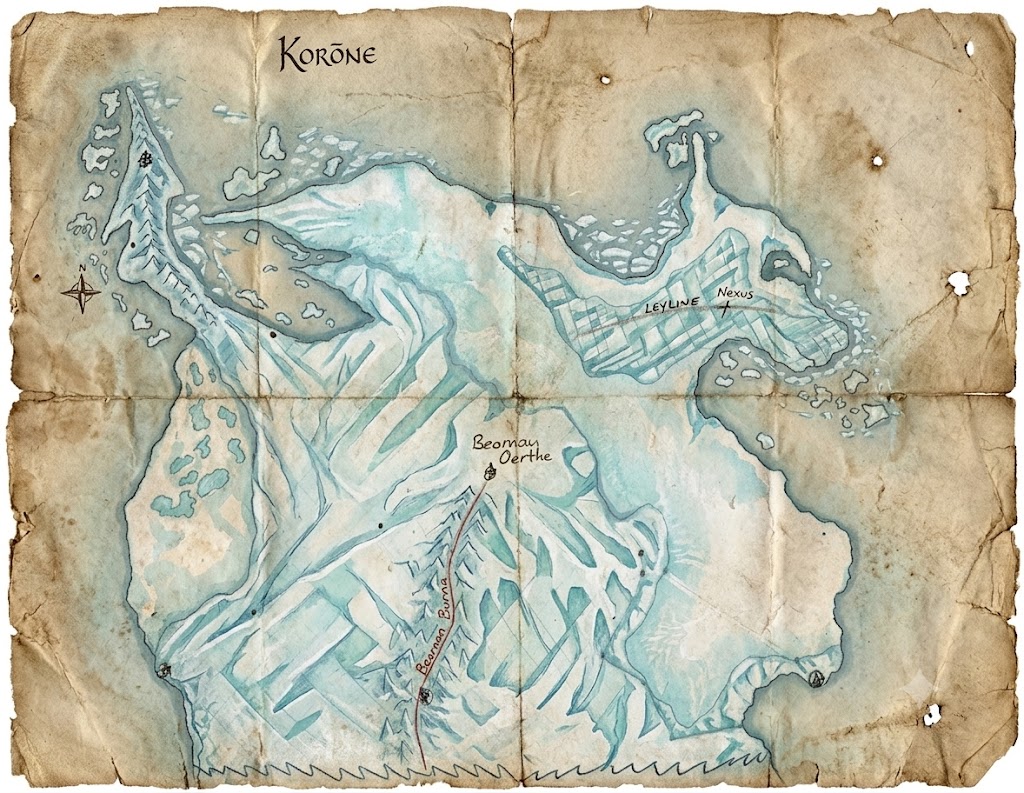
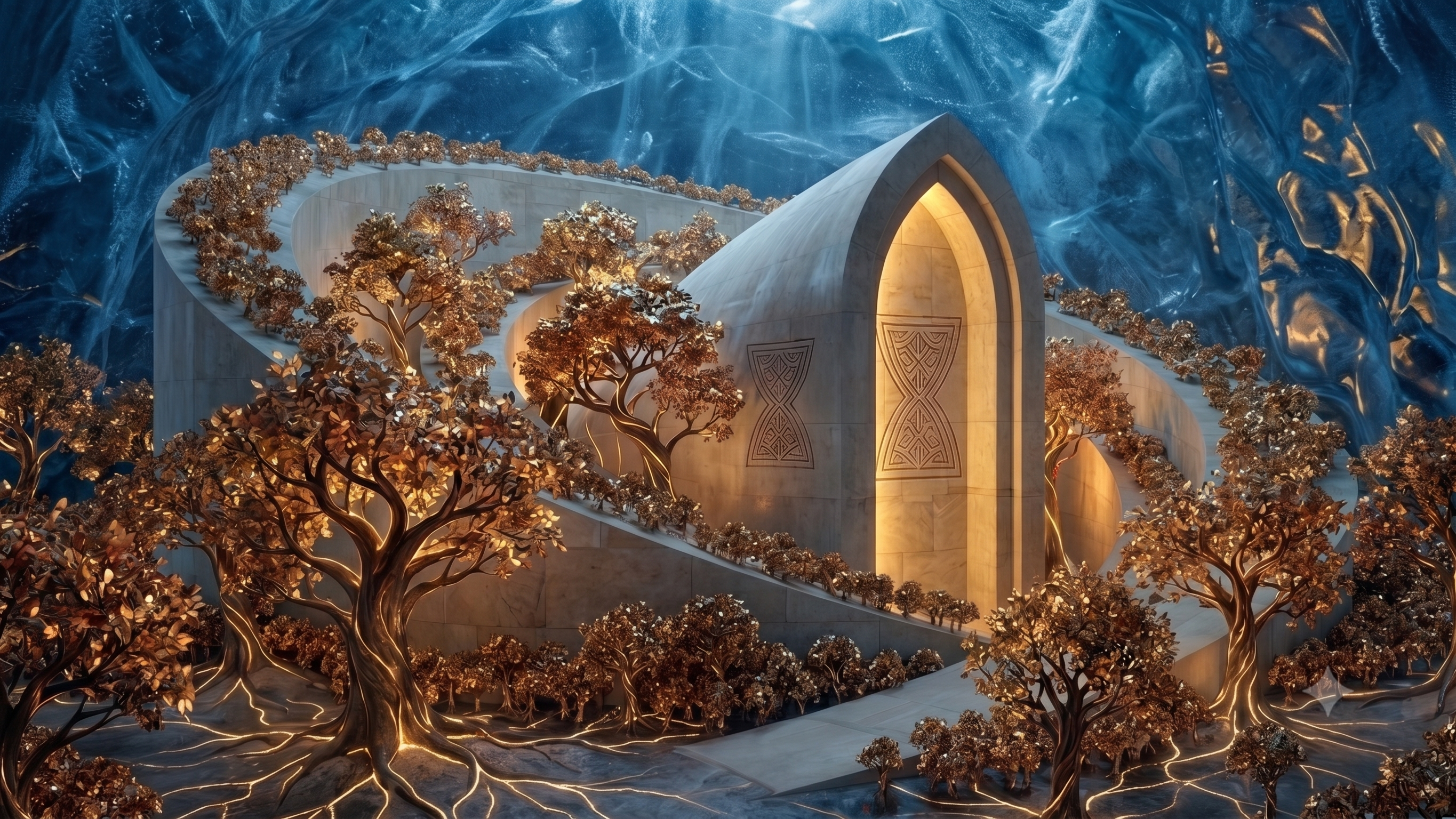
Buried deep beneath the Ice Shelf of Korone, there lies a temple of Noia. Surrounded by gilded trees that emit a subtle glow, the sanctuary rests upon a ley line nexus, a confluence of raw magic that makes the whole chamber feel faintly, persistently alive. Few who find it agree on how they got there; fewer still agree on how they left.
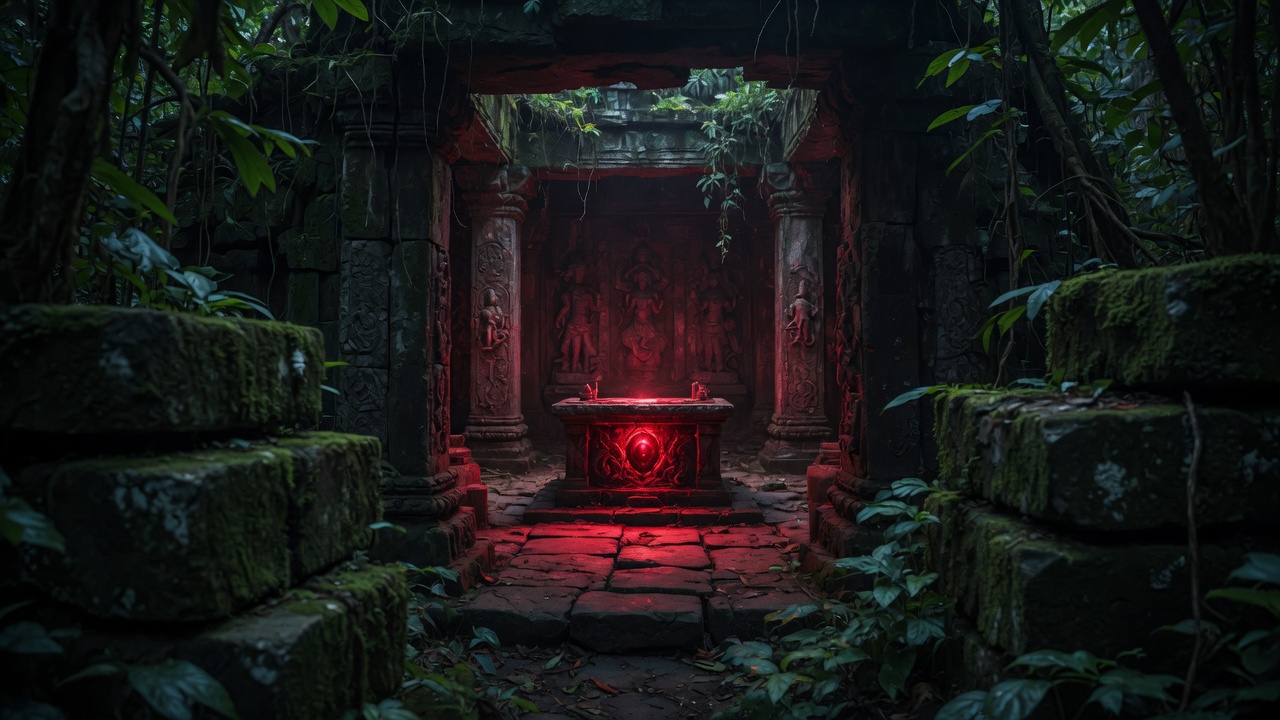
Korone's clerics don't officially acknowledge it, but sailors along the ice-locked coast still trade stories of a chamber that stays warm no matter how deep the drift piles against its door, proof, they say, that the Temptress keeps at least one foothold even here, in a realm that has never needed anything but survival.