The Realm of Seug
A southern realm of forested highlands and winding rivers.
Seug is a cross-shaped realm bordered to the north by the Gods Home Mountain Range, and its politics make Voir's civil war look tidy by comparison. This is a land of scheming, betrayal, and assassination dressed up in noble manners, sharpened further by how deeply divination is woven into the game. Witches and seers sell their sight to local lords, and more than one High Lord has quietly hired a knife for a low-born stranger, or a rival noble in some other state entirely, on nothing more than a seer's word that their paths were fated to cross. Roughly one citizen in three carries noble blood, which in Seug is less a privilege than a target, bloodline-hunting factions comb the lower quarters for exactly this reason.
Seug is ruled by a King-Priest, a divine office rather than a hereditary one, elected by the realm's Overlords and High Lords every fifteen years, or sooner if the throne falls empty. A King-Priest must carry noble blood and stand as at least a 1st-level divine spellcaster, though in practice the office has gone to 10th-level clerics and higher for generations; whoever holds it carries ceremonial divine status only for as long as they sit the throne, ruling alongside a spouse who takes the matching Queen- or King-Priest title. Beneath the throne, Dukes govern whole Dukedoms, and serving as Duke is the mandatory last step before anyone becomes eligible to sit the throne themselves. Beneath the Dukes, High Lords and Overlords administer the same counties at the same rank, the only difference between them is blood: High Lords are noble and can run for King-Priest; Overlords are commoners who've climbed as high as a commoner in Seug is able to climb. The current throne belongs to King-Priest Sondarianus Sambor and Queen Raquel, who succeeded King-Priest Mobius Shcherbatsky and Queen Robin.
Long before any of that, during an era of open warfare against Voir, Seug was home to a mortal warrior king remembered for his brilliance as a tactician and for the darker bargain he struck at the end of his natural life rather than let it end at all. That king is now known across the pantheon as King Horkos, the Odium, proof, if Seug's nobles ever needed it, that ambition here has never known where to stop.
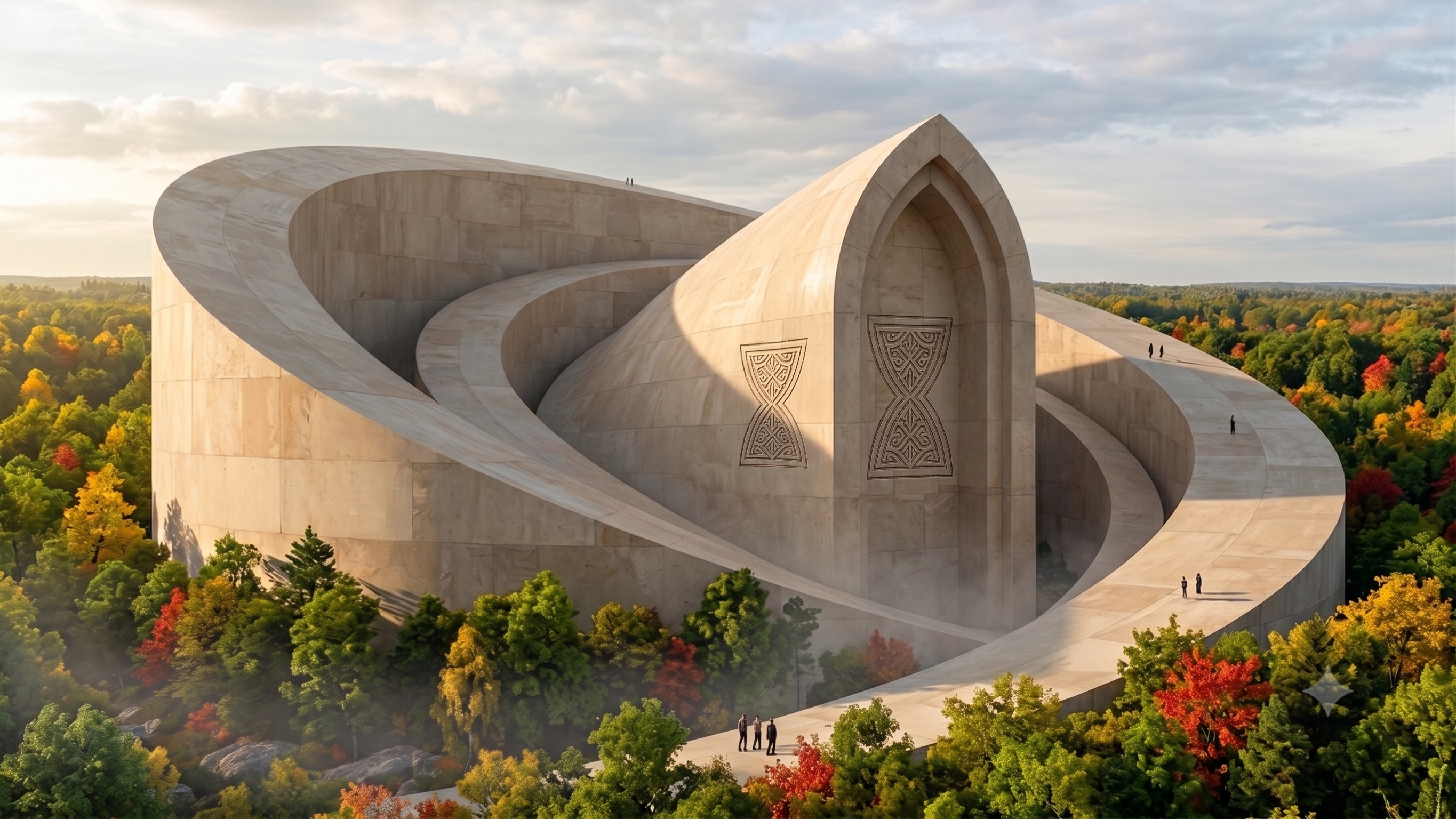
In the forested highlands south of the Voir Sea, one of Noia's sanctuaries sits woven into the tree line so completely that most travelers walk past it without noticing. The forest around it never quite finishes turning, its leaves hold the same burnished autumn color through every season, as if the temple itself is keeping that one afternoon, always.
A Living Temple of Caro Vanta
Where Voir's shrine to her fell to ruin, this one still stands, and its gate is still gold.
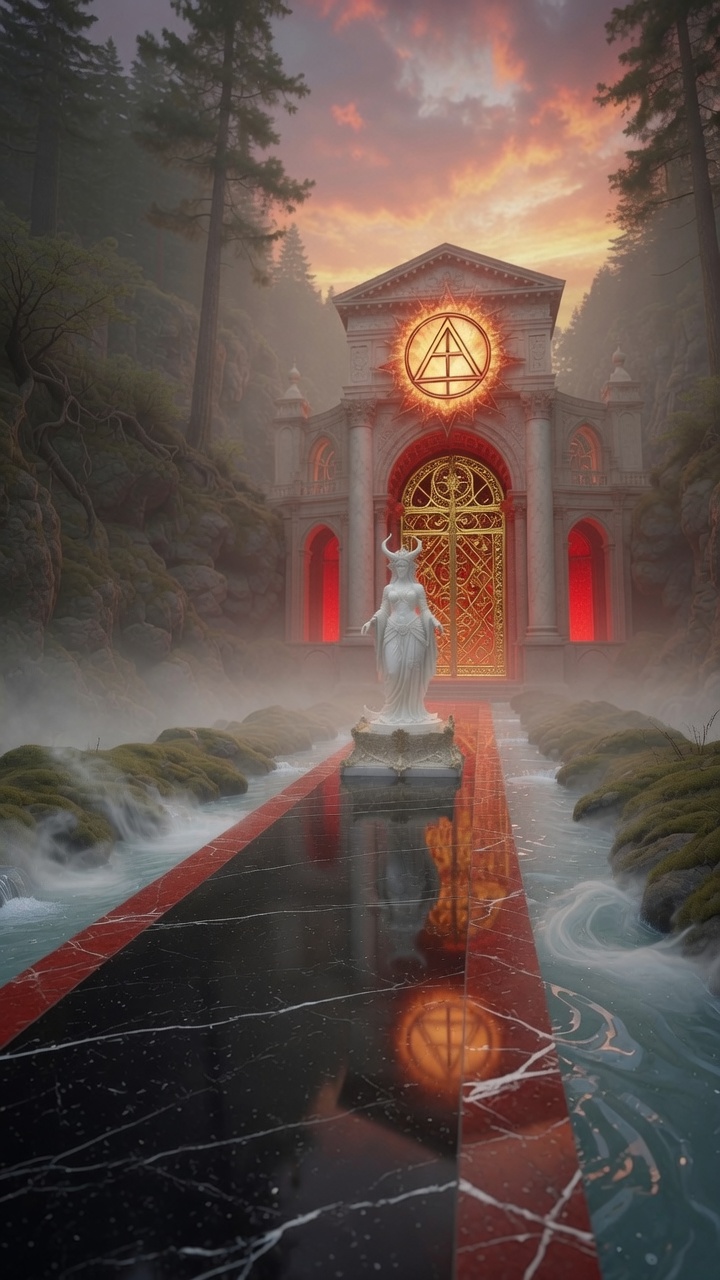
When the Monitors put Voir's shrines to the torch, it wasn't only her worshippers who fled south, whole processions carried what relics and gold-leaf they could save across the border into Seug, and rebuilt. This sanctuary is the result: a temple that still burns bright rather than moldering in a forgotten wood, its sigil lit above a gate that has never once needed to be forced open, because no one who reaches it has ever wanted to turn back.
The Gods Mountains. What Seug Remembers
Voir calls it a border. Seug calls it the road their grandparents walked to get here.
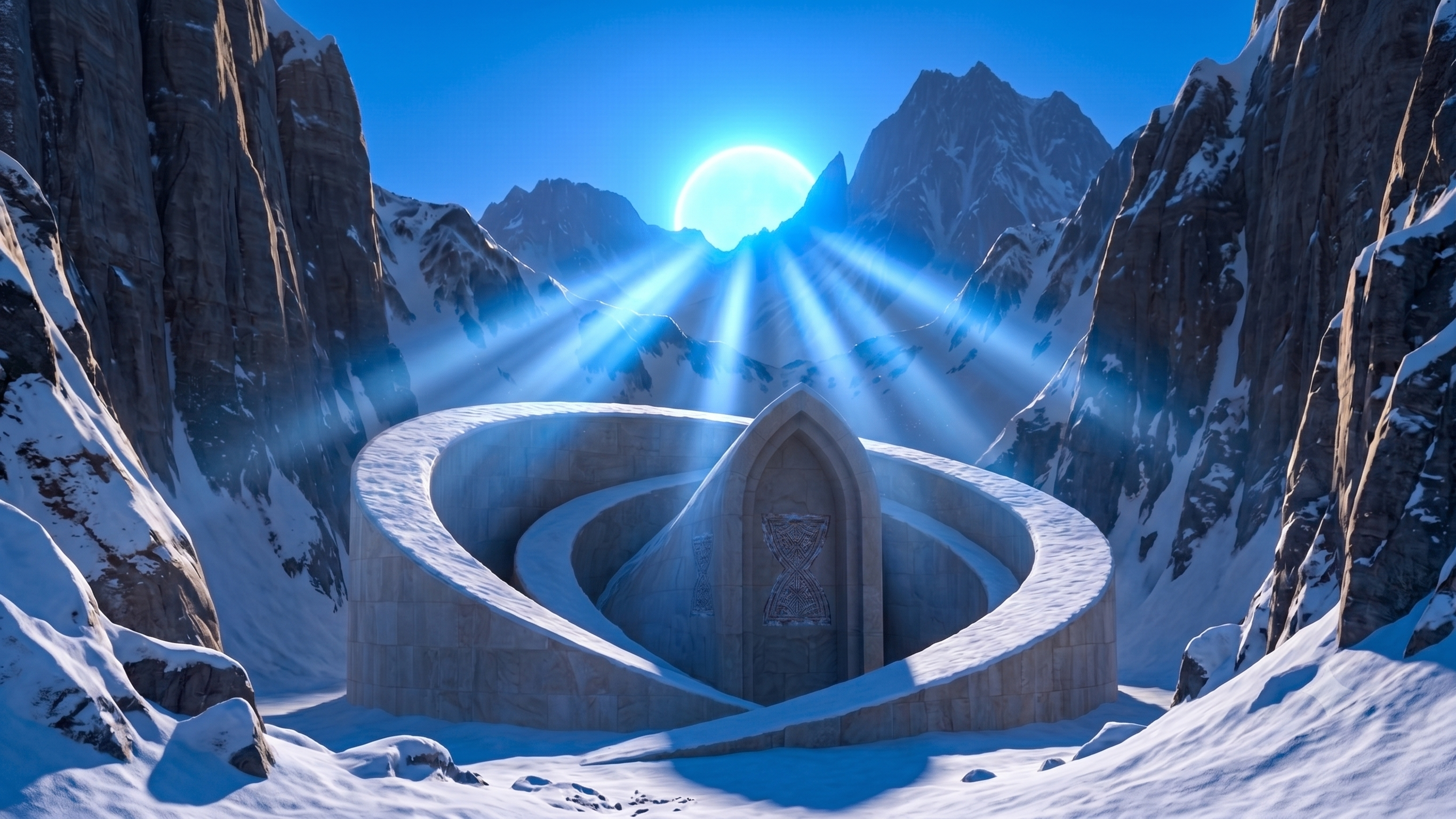
Seug doesn't garrison its side of the Gods Mountains the way Voir does. There's no unified crown to send soldiers, and precious little appetite for it anyway. What Seug keeps instead are pilgrim paths. Families whose grandparents or great-grandparents carried their gods south on their backs still make the climb, once a generation or so, to leave something at whichever ruined sanctuary their line claims as its own. No one polices it. No one needs to.
Ask someone in Seug what the Gods Mountains are, and you likely won't hear that name at all. Locally it's God's Home Mountains, or just God's Home, spoken the way people speak about a grave they still visit. The ruins up there aren't cleared sites to be logged and forgotten. They're the last address the old faith had before it had to run, and Seug has never quite finished being the place it ran to.